
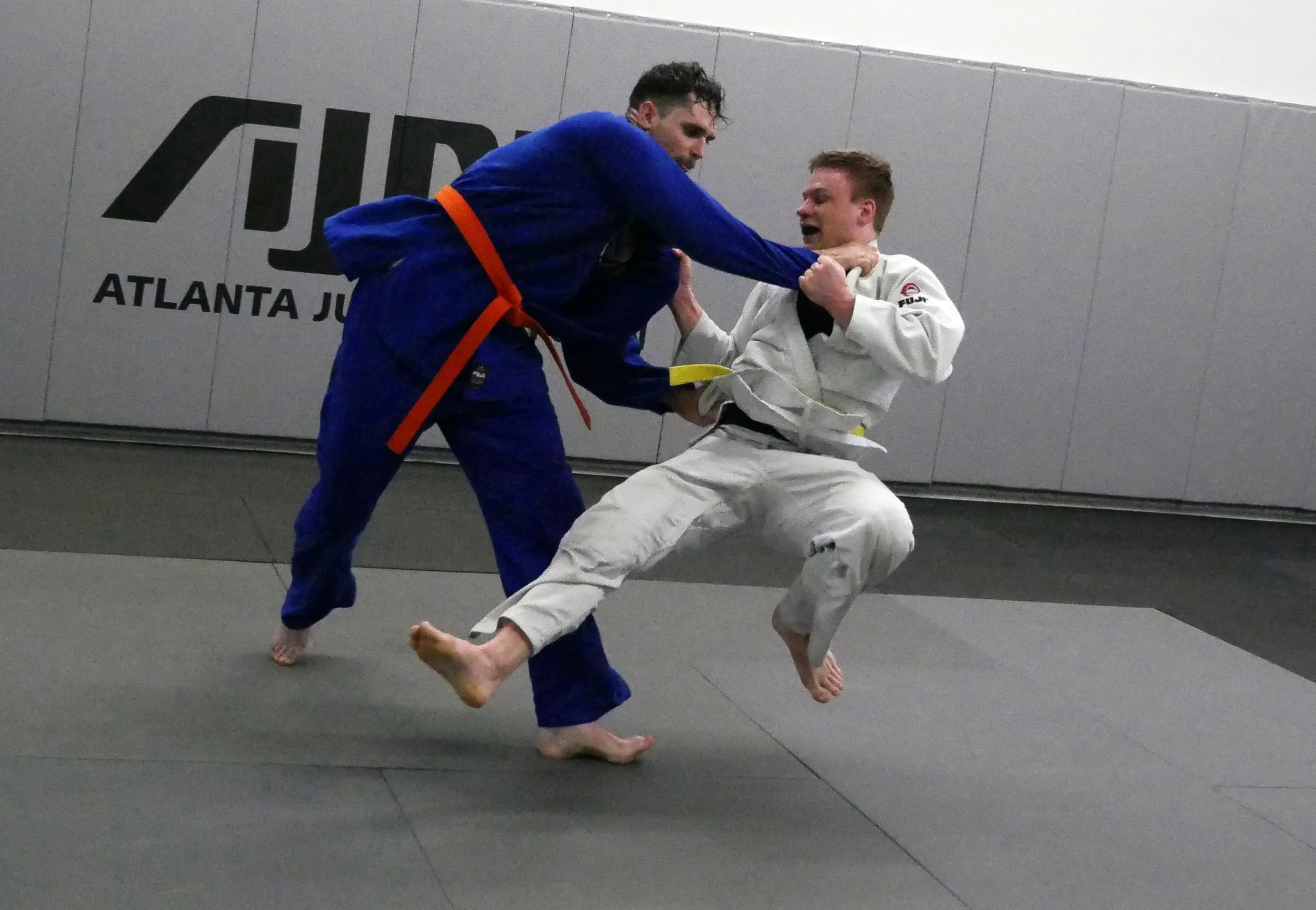
What is Judo?
Judo is a fast-paced Olympic martial art that builds strength, confidence, discipline, and resilience. Training includes dynamic throws, ground control, pins, chokeholds, and joint locks, all practiced safely through proper falling techniques (ukemi).
Founded in 1882 by Jigoro Kano, judo was designed to develop both physical skill and strong character. Today, it is practiced worldwide by people of all ages and experience levels.
The word judo means “the gentle way,” emphasizing efficiency, control, and mutual respect. Judoka train with full intensity while learning how to protect both themselves and their training partners.
Beyond technique, judo teaches perseverance, leadership, teamwork, humility, and self-control. These lessons extend far beyond the mat.
Frequently Asked Questions
-
AJM welcomes members of all ages, starting from as young as 5 years old to as wise as 90+ years old. We believe judo is a lifelong journey that offers valuable skills and lessons for people of all ages. Our diverse age range creates a rich learning environment where everyone can benefit from each other’s experiences and perspectives.
-
If you don’t have a gi yet, you should wear comfortable, athletic clothes that allow for a full range of movement. Think about something like a t-shirt and sweatpants or yoga pants. Avoid clothes with zippers or buttons, as they can be uncomfortable and potentially hazardous during practice.
-
Yes, you can start with a Brazilian Jiu-Jitsu (BJJ) gi if you already have one. However, as you progress, you will want to invest in a judo gi to ensure you're on a fair playing field with other players. Judo gis are generally more durable and designed to withstand the specific grips and throws used in judo.
-
Before your first class, make sure to cut your fingernails short to avoid scratching yourself or your training partners. It's also a good idea to bring flip flops or sandals to easily step on and off the mat, keeping the training area clean and your feet protected.
-
No prior martial arts or athletic experience is necessary to start judo at AJM. We welcome individuals of all skill levels and backgrounds. Our instructors are experienced in teaching and coaching beginners, and they will guide you through the basics while helping you build confidence and skill.
-
Yes, potential new members are welcome to watch a class before deciding to join. Observing a class can give you a better sense of what to expect, the teaching style of our instructors, and the overall atmosphere of the dojo. Please contact us to schedule a time to visit.
-
If you have an injury or medical condition, it’s important to consult with your doctor before starting judo. Inform your instructors about any health issues so they can modify exercises as needed and ensure your safety. Training can often be adapted to accommodate physical limitations, allowing you to still benefit from the practice.
-
You don’t have to be in excellent shape to start judo. Our classes are designed to accommodate all fitness levels, and as you train, you will naturally build strength, flexibility, and endurance. We do recommend supplementing your training with weight and flexibility exercises to enhance your judo practice.
-
When caring for your white gi, always use a color-safe, peroxide-based non-chlorinated bleach such as Clorox 2. Chlorinated bleach can weaken the fabric and shorten the lifespan of your gi, whereas non-chlorinated bleach will help keep it clean without damaging it.
-
No, you won’t lose your rank if you return to judo after a break. At AJM, we recognize your previous experience and rank. Our instructors will help you refresh your skills and get back into the flow of training, ensuring you feel comfortable and confident on the mat again.
-
Yes, AJM actively participates in tournaments at various levels. Our members, including Juniors, Seniors, and Veterans, compete in local, regional, national, and international events. We encourage our students to test their skills in competitions, as it provides valuable experience and opportunities for growth.
-
Safety is a top priority at AJM. Our instructors are trained to ensure all practices are conducted in a safe and controlled manner. We emphasize proper technique, warm-ups, and respect for training partners to minimize the risk of injury. We also have first aid supplies on hand and protocols for dealing with injuries should they occur.
-
The time it takes to earn a black belt in judo varies depending on several factors, including how often you train, your dedication, and your progression through the ranks. On average, it can take anywhere from 6 to 10 years of consistent training and practice to achieve a black belt.
-
Yes, AJM offers personal lessons for individuals or small groups who want more personalized instruction. Personal lessons can be an excellent way to focus on specific techniques, improve skills more rapidly, or prepare for competitions. Please contact our front desk to arrange private sessions.
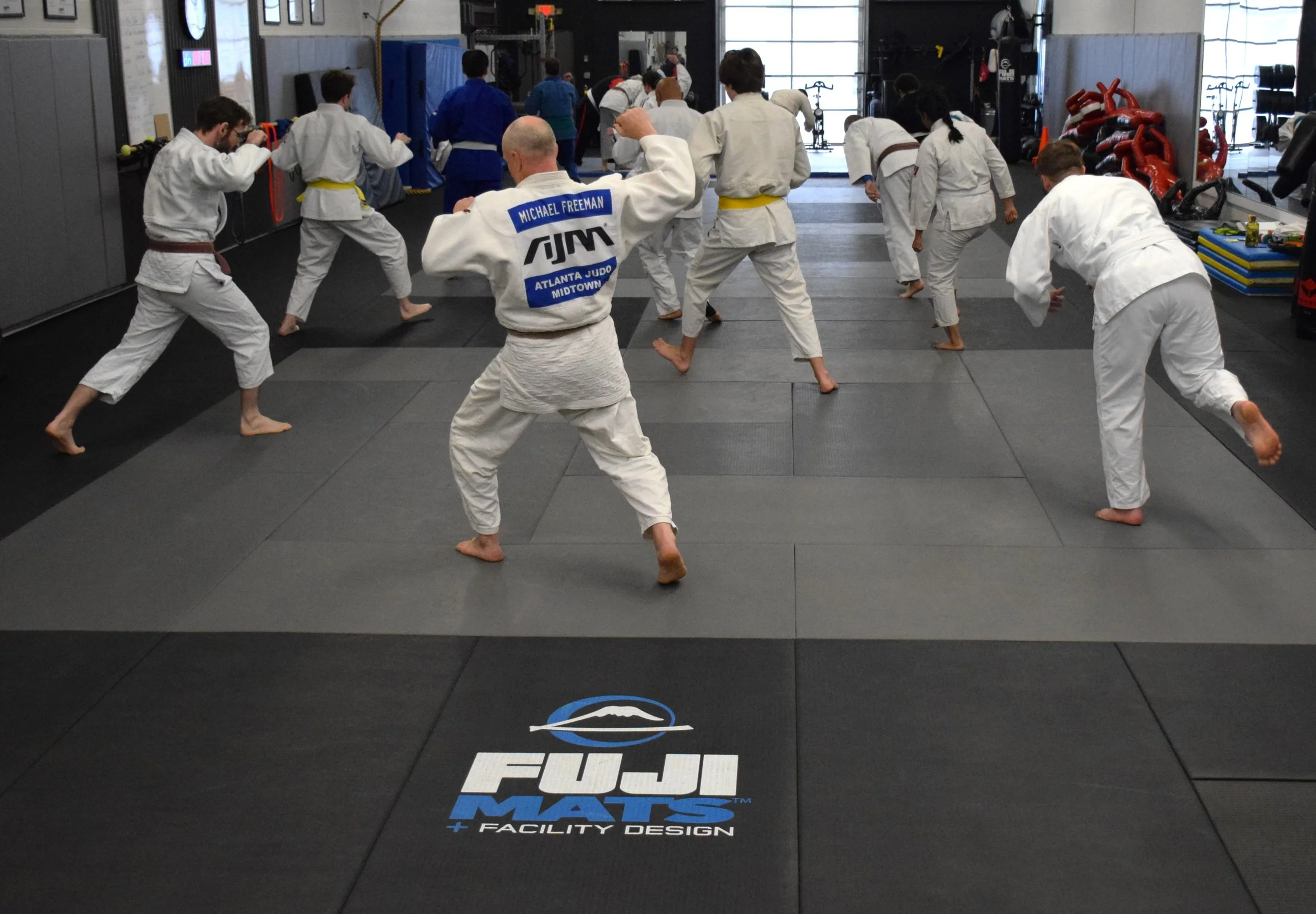
What are the benefits of Judo?
The Judo Moral Code
Created by Jigoro Kano, the Judo Moral Code teaches values that shape students both on and off the mat: Courtesy, Courage, Friendship, Honesty, Honor, Modesty, Respect, and Self-Control.
Confidence
As students develop their skills, they also develop self-confidence. Judo teaches people to stay calm under pressure and trust in their abilities.
Fitness & Athleticism
Classes combine conditioning, technique, and live practice to improve strength, cardio, coordination, balance, and agility.
Individual Growth Through Teamwork
Judo is an individual sport built on partnership. Students improve by training together, supporting one another, and learning through positive interaction.
Discipline & Respect
Through repetition and focused practice, judoka learn patience, discipline, attention to detail, and respect for their training partners.
Inclusive for Everyone
Judo is one of the few martial arts where people of different sizes, ages, and genders regularly train together in a supportive environment.
Respect for Strength
Students are taught that judo techniques come with responsibility. Respect, control, and safety are emphasized from day one.